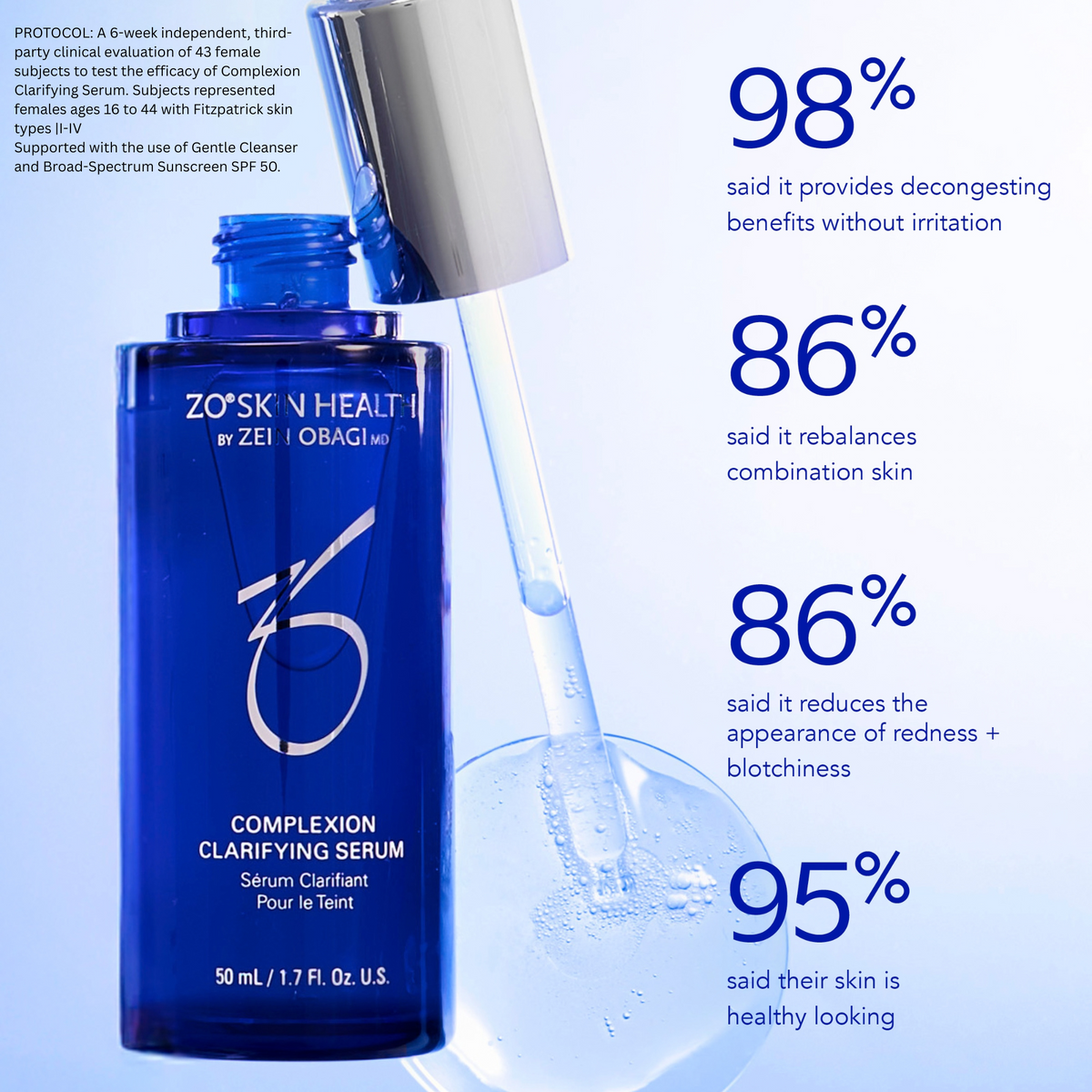
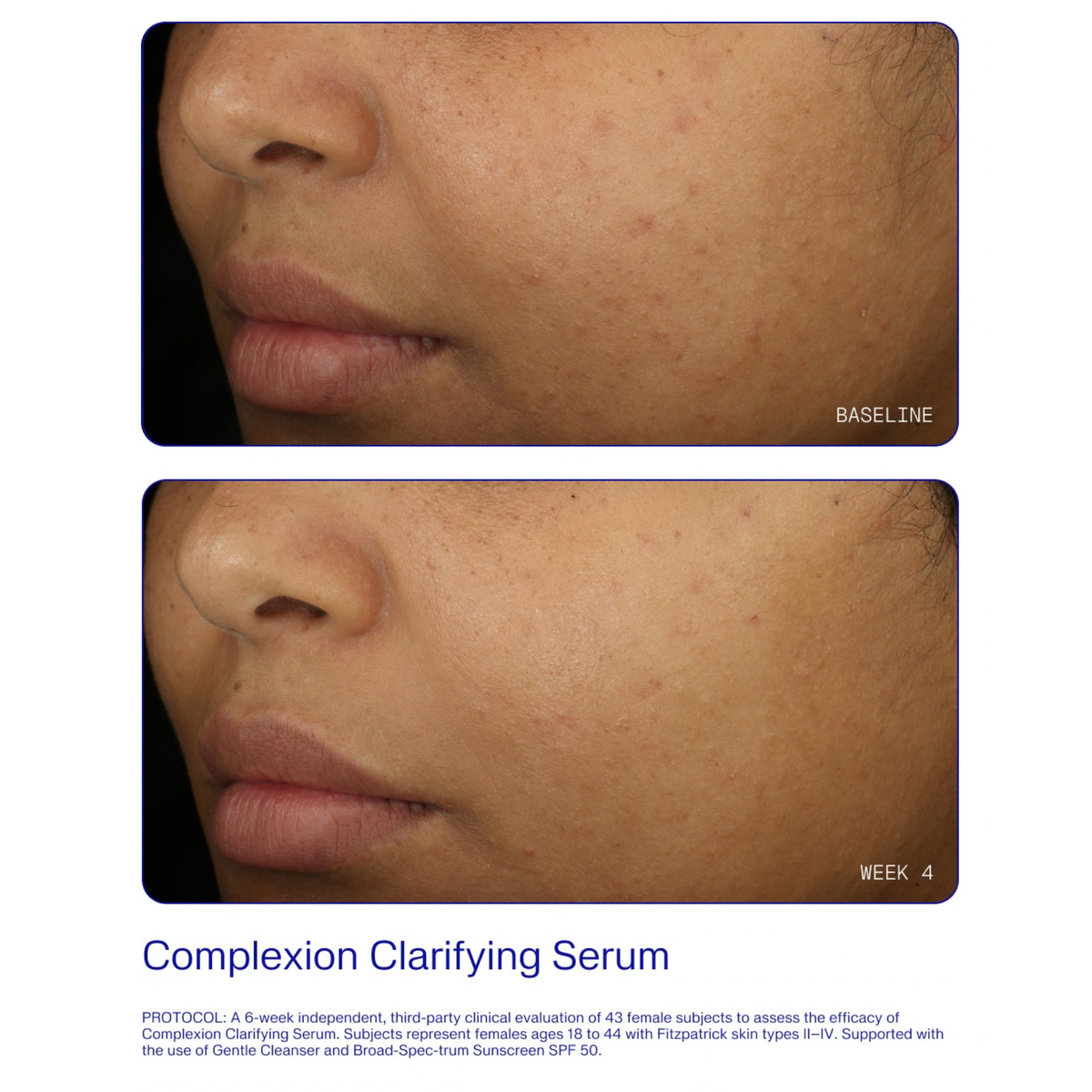
Complexion Clarifying Serum
Authorised Australian Stockist
A water-gel serum built around salicylic acid, formulated without fragrance or drying alcohol, with a botanical antioxidant and polysaccharide complex.
How it works
Who it suits
How to use
Layering
Before you start
Not suitable if
- Sulfite sensitivity
- Known aspirin or salicylate sensitivity
- Broken or compromised skin
Good to know
- Patch test on a small area of skin before first full use
- Speak to your doctor before use during pregnancy
Full ingredients
Aqua/Water/Eau, Propanediol, Glycerin, Salicylic Acid, Sodium Polyacrylate, Butylene Glycol, Eugenia Uniflora Leaf Extract, Laminaria Digitata Extract, Rosa Canina Fruit Extract, Syringa Vulgaris (Lilac) Extract, Opuntia Ficus-Indica Stem Extract, Leontopodium Alpinum Meristem Cell Culture, Marrubium Vulgare Meristem Cell Culture, Lecithin, Galactoarabinan, Schizophyllan, Maltodextrin, Caprylyl Glycol, Phytic Acid, Trisodium Ethylenediamine Disuccinate, Inulin Lauryl Carbamate, Acacia Senegal Gum, Xanthan Gum, Mannitol, Sodium Citrate, Hydroxyacetophenone, Trehalose, Sodium Bisulfite, Ergothioneine, Phenoxyethanol, Chlorphenesin, Benzyl Alcohol, Potassium Sorbate, Sodium Benzoate.
Pairs well with
Three steps our clinical team reaches for alongside this one.